Ed Sappin | Philanthropy & Community

Giving & Volunteering

  • Home
  • Philanthropy & Community Blog
  • Contact

Brooklyn Progressive: The Art of Gertrude Sappin

September 18, 2017 by Sappin

I am back after a hiatus and will continue to highlight unique and interesting artists. My next profile is of Gertrude Sappin, who was also my grandmother.

Gertrude Kellerman was born in Hungary in 1902 and emigrated to the United States in her teens. She settled in Brooklyn, New York and became a lifelong progressive. After having a family and raising them, Gertrude Sappin became a well known artist later in life. She passed away in 1992.
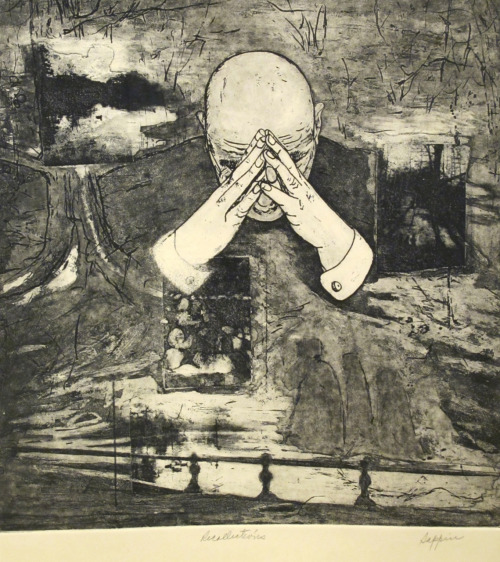
 

Gertrude Sappin Recollections


My grandmother’s art career began when she was in her 60s. A force of nature, she and her colleagues founded the Contemporary Artist’s Guild around 1968. Grandma Gertrude’s work ranged from oil paintings, to etchings, to lithographs, to sketches. My personal favorite is Recollections, with a representation of Winston Churchill at center and wartime images surrounding him.

Grandma Gertrude exhibited with CAG at the Brooklyn Musem of Art, Lincoln Center, and Lever House, amongst other venues. I fondly remember attending many of these exhibitions as a boy.

I’ve recently put together a basic website for my grandmother’s work. I hope to expand it over time.
 

Share this:

  • Twitter
  • Facebook
  • LinkedIn
  • Email
  • Reddit
  • More
  • Print
  • Pocket
  • Tumblr

Filed Under: Art, Community, Museums Tagged With: art, Brooklyn, gertrude sappin, museums, new york, sappin

Winning the White House

November 8, 2016 by Sappin

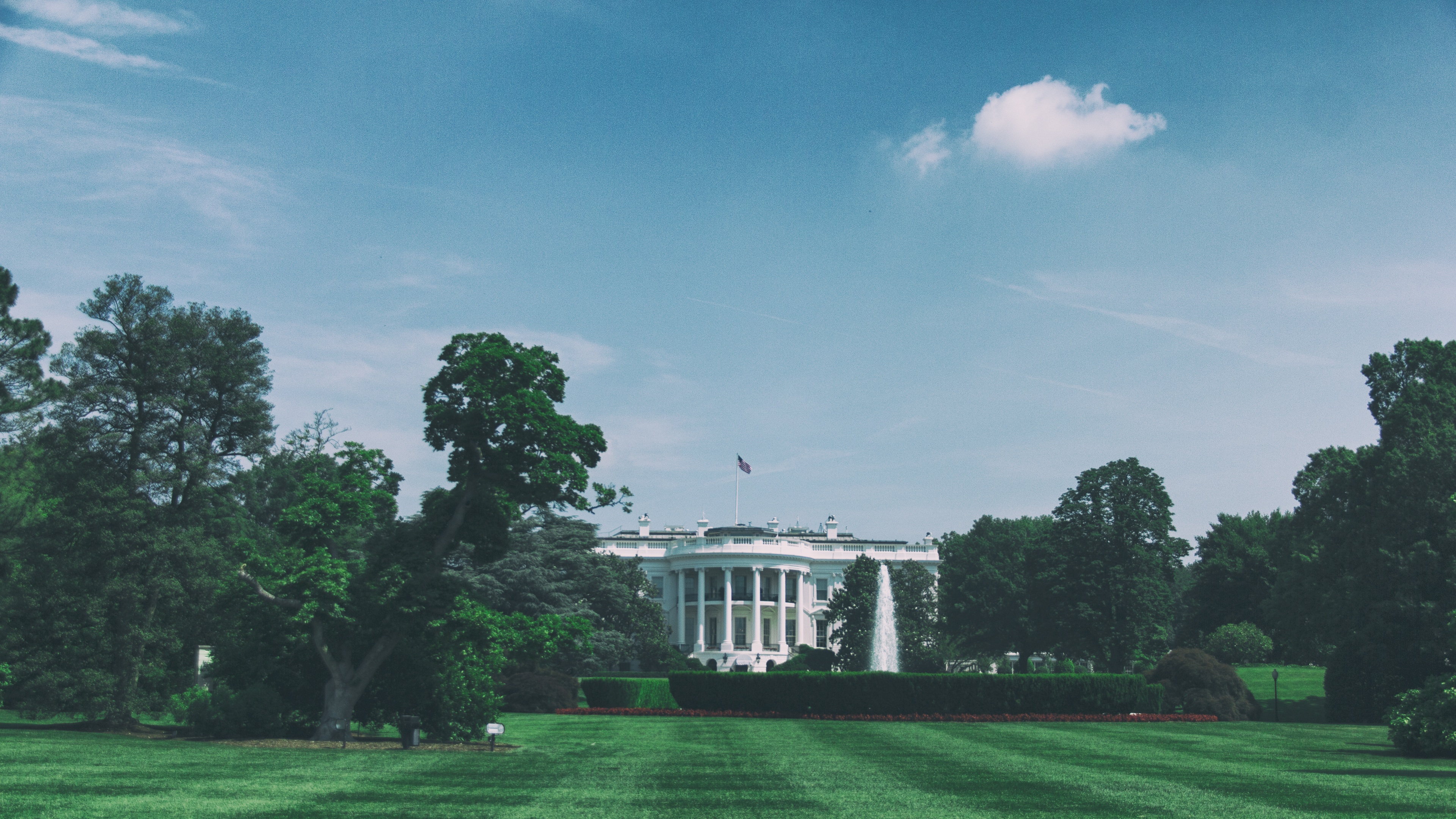
photo-1467251589161-f9c68fa14c59

We are finally here – it is election day 2016 after one of the most vicious electoral campaigns of modern times. The candidates have tried to leverage all the modern tools to win the day. In spite of this, the election of 1960 was arguably even more of a watershed for presidential candidates and their public images.

John F. Kennedy and Richard Nixon participated in the first nationally televised debate on September 26, 1960. Those who listened on the radio thought Nixon won with his answers about current issues. However, the debate on television was a different story.

Nixon sported five o’clock shadow, appeared to be sweaty and didn’t look at the camera. Kennedy appeared well-groomed and confident. Kennedy looked like he was the better candidate — and won over the 70 million television viewers by a broad margin.

And that was just the beginning.

With the rise of television, the internet and social media, image has become paramount for presidential candidates, while substance has waned in importance. Winning the White House: From Press Prints to Selfies, a photography exhibit presented earlier this year by the International Center of Photography (ICP) at the Southampton Arts Center in New York, explored the complicated relationship between candidates’ personal images in visual media and their carefully created and tightly controlled campaign images over time.

The exhibit featured campaign memorabilia, posters, and video materials created for the candidates from the start of the campaign image revolution – with John F. Kennedy and Richard Nixon — to current candidates Hillary Clinton and Donald Trump.

In a press release issued by ICP, Assistant Curators Claartje van Dijk and Susan Carlson describe the evolution of the campaign image and the importance it has in the current election today.

“Presidential candidates have used photographic imagery in their campaigns to impact public opinion,” says van Dijk. “The delivery method has shifted from print publications to broadcast to computer and mobile phone screens.”

Carlson goes more in-depth about imagery and the presidential election today. “With the rise of smart-phone technology and the rapid rate at which images are released on social media, the 2016 campaigns are seeing an even greater demand for visual content,” she said. “This provides us with a timely opportunity to explore photography’s significant role in elections.”

The free exhibit ran from August 6, 2016 to until September 11, 2016 at The Southampton Arts Center. You can view some of the artwork on social media channels by using the hashtag #WinningtheWhiteHouse.

Share this:

  • Twitter
  • Facebook
  • LinkedIn
  • Email
  • Reddit
  • More
  • Print
  • Pocket
  • Tumblr

Filed Under: Edward Sappin, Museums Tagged With: Campaign, ed sappin, Election 2016, Government, Kennedy, Nixon, Politics, President, Presidential Election, United States, US Politics, USA, White House

Nature, Technology and Humanity through the Worlds of Robert and Shana ParkeHarrison

October 28, 2016 by Sappin

In 2007, I was living in Shanghai and decided to come back to the US for a visit to see my family in New York. I also passed through Chicago to attend the law school commencement of a cousin living there. Trudging through the winter in Chicago was actually fun (my cousin graduated midyear). I had some free time during the trip and visited the Catherine Edelman Gallery in River North, where I first saw the works of Robert and Shana ParkeHarrison.

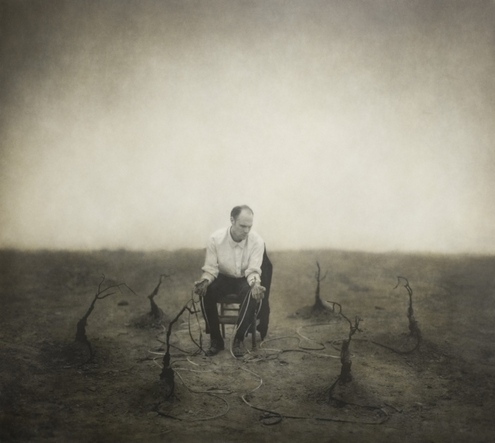
I was taken with the worlds the ParkeHarrison’s depicted in their bleak photographic works – the environment suffering greatly, often with an everyman trying to help heal some of the ills that have befallen Mother Nature.

Earth Elegies by Robert and Shana ParkeHarrison (from the artists’ website)

Earth Elegies by Robert and Shana ParkeHarrison (from the artists’ website)

The ParkeHarrisons became one of my favorites from that day onwards. Their statement is one of alarm, concern and warning of the world we live in and where it may lead:

We  create works in response to the ever-bleakening relationship linking humans, technology, and nature. These works feature an ambiguous narrative that offers insight into the dilemma posed by science and technology’s failed promise to fix our problems, provide explanations, and furnish certainty pertaining to the human condition.  Strange scenes of hybridizing forces, swarming elements, and bleeding overabundance portray Nature unleashed by technology and the human hand.  

Rich colors and surrealistic imagery merge to reveal the poetic roots of the works on display.  The use of color is intentional but abstract; proportion and space are compositional rather than natural; movement is blurred; objects and people juxtaposed as if by chance in a visual improvisation that unfolds choreographically.  At once formally arresting and immeasurably loaded with sensations—this work attempts to provide powerful impact both visually and viscerally. 

– Robert and Shana ParkeHarrison (as posted on the artists’ website)

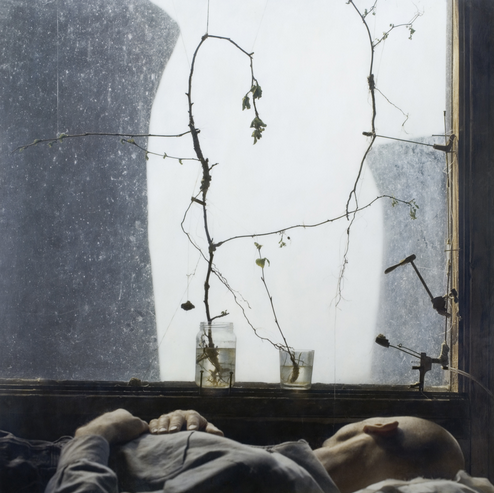
While their artistic statement expresses great concern of a potentially apocalyptic future, the ambiguity in their statement also points to the ability to correct our course and become better stewards of the land. On that day in Chicago, I was particularly taken with Gray Dawn, a dreary, contemplative work. Our everyman lays on a bed, asleep still or waking we do not know, with a dirty window in front of him and a scene outside dominated by a power plant or industrial facility. However, there are signs of life, of Mother Nature, as plant trimmings sprouting in the foreground point to another dawn.

 Gray Dawn by Robert and Shana ParkeHarrison (from the Catherine Edeleman Gallery website)


Gray Dawn by Robert and Shana ParkeHarrison (from the Catherine Edeleman Gallery website)

The ParkeHarrisons are well represented by major galleries in New York, Chicago, and Colorado and their works have been included in the permanent collections of institutions including the Whitney, the National Museum of American Art in Washington, DC and the Museum of Arts in Boston. If you have a chance to see their creations I highly recommend it.


Share this:

  • Twitter
  • Facebook
  • LinkedIn
  • Email
  • Reddit
  • More
  • Print
  • Pocket
  • Tumblr

Filed Under: Art, Edward Sappin, Museums, Photography Tagged With: art, ed sappin, humanity, museums, nature, photography, technology

The Rubin Museum “Sacred Spaces”

October 4, 2016 by Sappin

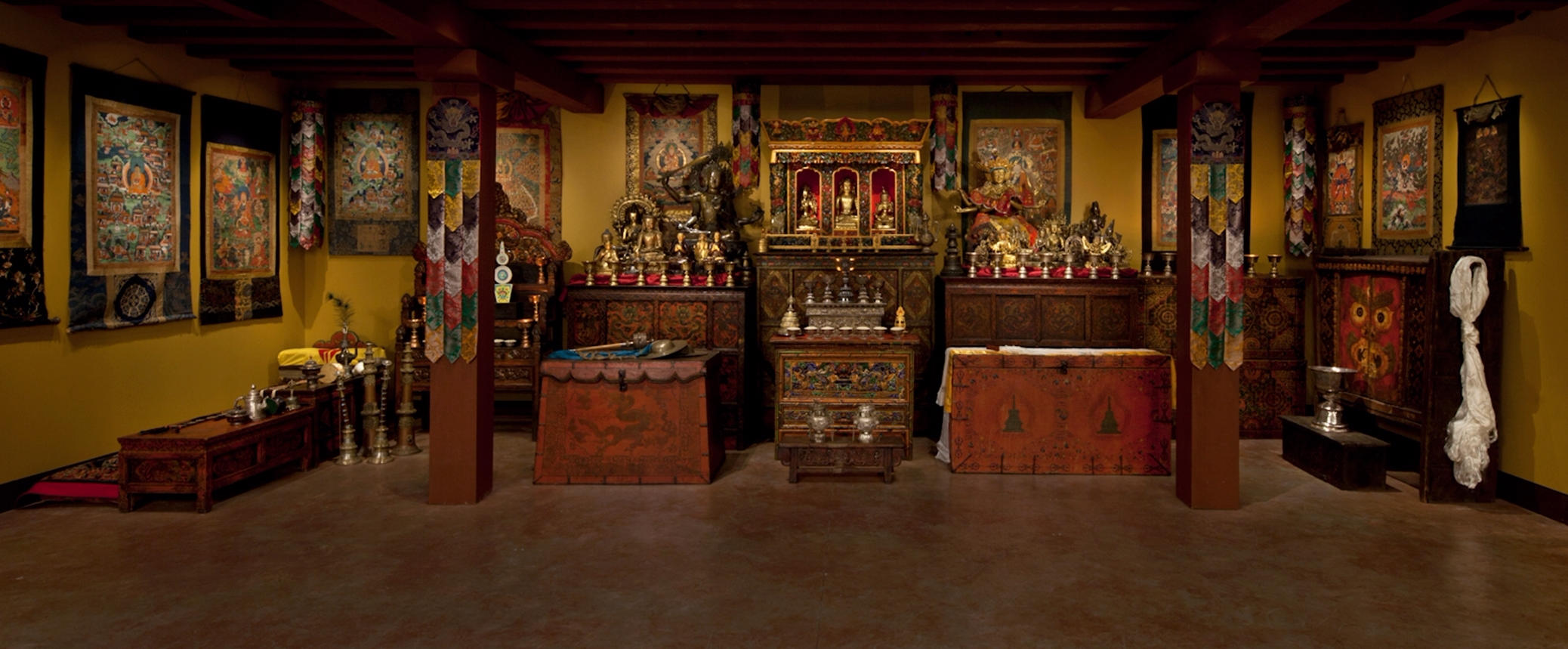
The Tibetan Buddhist Shrine Room [Image courtesy of RubinMuseum.org]

Sacred Spaces, which has been on display at the Rubin Museum for almost a year, is a meditation on spirituality, physical spaces, and their intersections. The exhibition showcases three environments that have been shaped by human religiosity and acts of veneration.

In a recent interview for Splacer Magazine, Rubin Museum Director of Programs and Engagement Tim McHenry explains how the idea for ‘Sacred Spaces’ came to be. McHenry describes how, after the opening of the

“Tibetan Buddhist Shrine Room in an intimate, but cramped nook on the second floor gallery, there was a realization that it was inadequate…We wanted to create an environment that allowed for a durational relationship, one that builds up through exposure over time.”

When it opened in 2010, the Rubin’s Shrine Room wasn’t supposed to be permanent (it was on loan from the Arthur M. Sackler Gallery at the Smithsonian); the current iteration was supported through a crowdfunding campaign on Razoo. The exhibit explores the meaning of physical space in a couple of different ways: there is a 360-degree panoramic photograph of the Himalayan Mountains, which circumscribes the exhibit’s Shrine Room, and a video installation documenting a Jain communal ritual in which a massive stone sculpture is erected every dozen years. The video invites viewers to consider the concept of rituals–I found this aspect of the film to be particularly meaningful.

The room where Sacred Spaces is on display conveys a sense of intimacy–and also community. The two aren’t at odds with each other. Visitors are given the sense that in the personal, there is the universal. To that end, Sacred Spaces asks its visitors to consider: what spaces are sacred to you?

The Sacred Spaces exhibition is open to the public through October 17th. The beginning of autumn strikes me as a rather contemplative time of year. Make a date with yourself to catch this fascinating exhibit before it closes!

Share this:

  • Twitter
  • Facebook
  • LinkedIn
  • Email
  • Reddit
  • More
  • Print
  • Pocket
  • Tumblr

Filed Under: Museums Tagged With: art exhibition, eastern art, ed sappin, Edward Sappin, exhibition, himalaya, Himalayan Art, New York City, Rubin Museum, sacred spaces, tibetan art

Gateway to Himalayan Art at the Rubin

September 1, 2016 by Sappin

Gateway to Himalayan Art

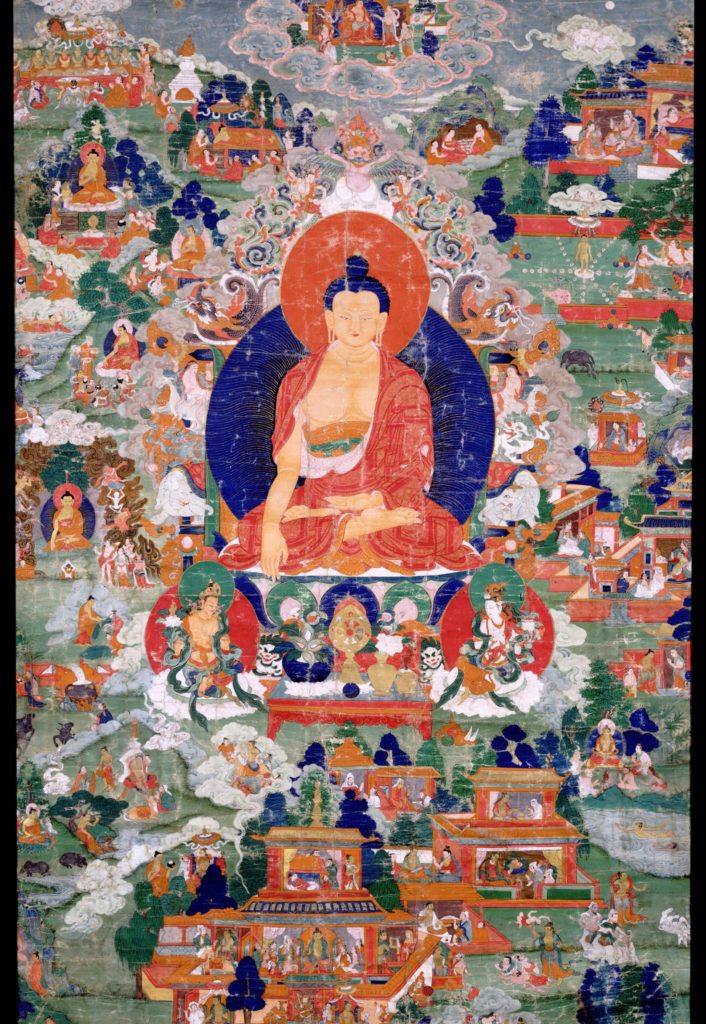
“Life story of Buddha Shakyamuni,” a Tibetan cloth painting on display at the exhibit.                           [Image courtesy of RubinMuseum.org]

New York City is home to a vast range of museums, many of them legendary, from the Met to the MoMa to the Museum of Natural History. While big-name museums are exciting to visit, there are also many niche institutions throughout the city. The Rubin, a cultural hub for Asian art, is one that I find fascinating and wish more people knew about.


Located in Chelsea, the Rubin, “inspires visitors to make powerful connections between contemporary life and the art, cultures, and ideas of the Himalayas and neighboring regions.” Since opening in 2004, the Rubin has had 1.4 million visitors through its interactive and educational exhibits that connect contemporary world to Himalayan art, ideas and history.


Himalayan art is not something everyone has an inherent familiarity with, which is why a visit to the Rubin can be particularly eye-opening and intriguing. The exhibit “Gateway to Himalayan Art,” a year-long exhibit lasting this June to next, is a wonderful way to introduce new viewers to the Rubin’s collections. Even those like myself with an interest in Asian Art can glean new and interesting insights from “Gateway.”


“Gateway to Himalayan Art” introduces visitors to the main concepts, forms, and themes  within the Rubin’s collections: a gateway in every sense of the word. It opens with a video presentation and virtual map that highlights regions of interest, including past and present parts of Mongolia, India, Nepal, China, and Bhutan. Significant objects from the collection are arranged within the exhibit by theme: 1) figures and symbols, 2) materials and techniques, and 3) purpose and function. This careful, organized curation helps visitors understand what a piece of art means, what it is made for, and what it does or did.


The most common depiction is the Buddha, or “enlightened one,” founder of Buddhism and religious figure in 5th or 6th century BCE. A variety of Himalayan gods and goddesses can also be observed on scrolls, murals, sculptures, and tools.


The Rubin Museum is a fantastic museum for any visitor, its collections full of items that provide a window into another part of the globe. “Gateway to Himalayan Art” is an educational portal into this magnificent world, well-suited for both first-time visitors and specialists. Next time you’re in Chelsea, why not treat yourself?

Share this:

  • Twitter
  • Facebook
  • LinkedIn
  • Email
  • Reddit
  • More
  • Print
  • Pocket
  • Tumblr

Filed Under: Edward Sappin, Museums, Philanthropy Tagged With: art exhibits, Buddha, Himalayan Art, Rubin Museum

Recent Posts

  • 10 New York Charities to Consider during the Holidays
  • Brooklyn Progressive: The Art of Gertrude Sappin
  • Running with and for the Community
  • The Giving Season
  • Forever Paris: Willy Ronis’s Striking Style
  • Facebook
  • Instagram
  • Linkedin
  • Twitter
  • Vimeo

Links

  • Community and Business Leader
  • Ideas & Innovation
  • Instagram
  • Sappin Global Strategies
  • Sappin Photography

return to top of page

Copyright © Edward Sappin · 2026